Tuesday, April 24, 2012

Do you Fuyu?

We have a new permanent member to the victory garden.  Say hello to Fuyu.  She is a persimmon tree.

Fuyu is staked into the ground.

Fuyu was planted on March 8th. Since that time, she have seen much growth.  Green buds grew.


Then, light magic, the buds pushed out green branches and leaves.  She is growing to be a big part of the victory garden.

Strawberries are showing their colors.


The rest of the victory garden is growing nicely in the sun.  The tomato plants have have been transplanted.  They are still small but will grow quickly in the next month.

Cucumber sprouts
The battle with the evil gastropods continues.  The gastropods devoured the cucumber plants.  I replanted.  We now have a nice row of cucumber seedlings.  I have swept the garden and destroyed most of the intruders. But they will be back.  Gastropods are persistent.


(L to R) Burgundy, Scarlet emperor, & Blue lake beans

The Scarlet Emperor beans are growing quickly.  They have reached the netting and are now beginning to crawl.

Lettuce is coming along...

Sunshine, check.  Water, check.  Now cross your roots and hope for more growth.

Thursday, April 12, 2012

Transplanting and mulch

The mulch has arrive and the transplanting is nearly done. I have transplanted the zucchini, summer squash, and butternut squash to the garden beds.  All of the bean, bitter melon, and cucumber plants have also made the move to the main garden.

keeping the weeds away with free mulch from the dump
Majority of the plants have settled in nicely and are growing quickly.  However, there were a few fallen soldiers.  The yard beans did not survive the move and more seeds were planted.  The cucumbers have also struggled and may not make it through the weekend. I have planted additional cucumber seeds in the event the current plants do not survive.


The strawberries are doing very well.  I found my first red strawberry today.  I cannot wait to make my first strawberry slushy, yum!


The lettuce mixes are showing their colors while the sweet and Thai basil sprouts reach for the sky.  I foresee lots of pesto in my future.


Victory Garden First!  Last season I planted a seed that would eventually become an eggplant sprout.  The 2011 season was cold and the seed did not sprout until late summer.  The poor little plant did not push out it's first leaves until fall.


The victory garden saw a very warm fall season, which gave the plant time to grow.  A very cold dry winter hit. I dug up the plant and placed it into a pot.  The pot sat under a covered space in my backyard all winter.  Fast forward to 2012 spring.  The plant began sprouting new leaves and growing taller.  So here we are, almost the middle of spring and last season's eggplant sprout is now growing again in the victory garden.  The plant will turn one-year-old in a few months.  What a survivor!

Tuesday, March 27, 2012

Vertical gardening - the basics

I received a book from my father titled, Vertical Gardening: Grow Up, Not Out, For More Vegetables and Flowers In Much Less Space by Derek Fell. My father had given me the book in the middle of a college semester.  This meant, the book would sit on my bookshelf for a few months while I read and grade student papers.  Once I had a break, I found time to read the book.  I found the book easy to read.  The entire book is organized for a beginner, like myself, who wants to jump from topic to topic while absorbing the information again and again.  I have read the book over 3 times cover to cover and spent a few hours perusing particular chapters and pages.

Vertical gardening is growing your fruit up on netting or any other type of support structure.  You could use a chain link fence to create a vertical garden.  Can you imagine a fence accented with food for you to consume?  Yum!  Simply put, you grow up to save space.  However, Fell would also add that vertical gardening produces more fruit.  Either way, I wanted to try it out.  I was tired of digging holes and moving vines when space was filling up.  I wanted a vertical garden... so how do I start? According to Fell, there are two important starting points when planning a vertical garden:
  1. You will need a good location/soil for the plants.
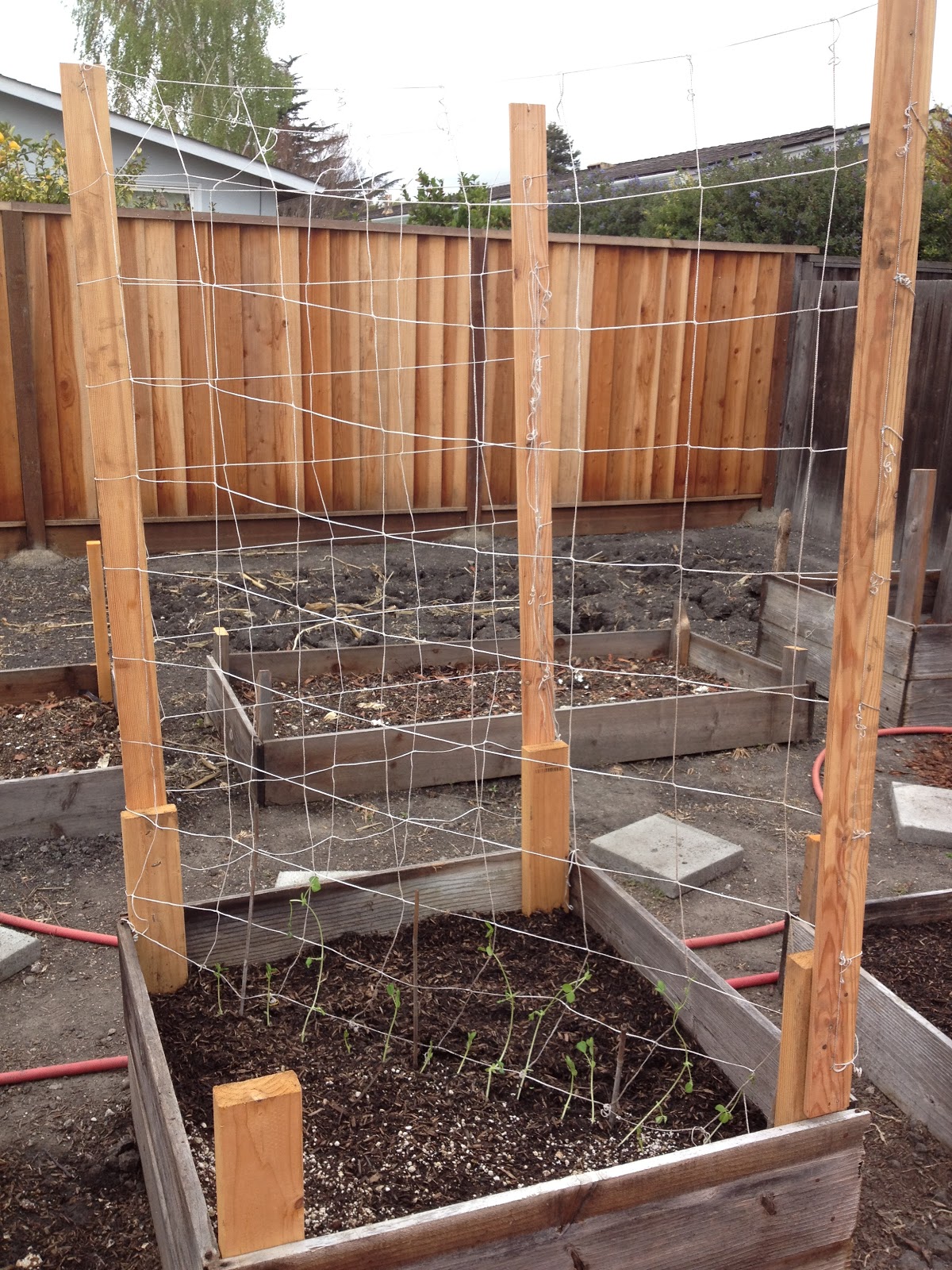
  2. You need good support structure for the vertical garden (i.e., netting, trellis, boards, stakes, etc.)
Chapter two discusses the basics and introduced me to lasagna gardening.  Lasagna gardening is an easy way to reuse items and turn hard weed infested ground into soft fertile soil.  I used the lasagna technique when preparing the garden beds in the victory garden.  I first laid down 10-15 layers of newspaper on the bottom of each garden bed.  I hosed down the newspaper a few times while laying down the various layers of newspaper.  Then I filled the bin with browns, greens, browns, greens, etc.  Browns refers to dried leaves and chopped up corn stalks.  Greens are lawn clippings and fresh kitchen scraps typically used for composting.

one layer of newspaper, wet, repeat 15X
add a layer of browns
add a layer of greens, repeat with brown
I filled each garden bed 50% using the lasagna gardening method.  I spread our homemade compost over the layers of "lasagna" and topped off the bed with a bag or two of gardening soil.  I did not fill my garden beds to the top.  I like the boards taller than the seedlings or transplants.  The taller sides break the wind that could snap delicate bean transplants or seedlings.
double layer (back) and single layer (front) garden beds

My effort to build garden beds with recycled materials while enforcing a no dig policy has come to an end.  I was successful in building garden beds out of recycled materials.  My family recently replaced the front yard fence.  We saved the planks from the old fence and used them to construct the sides of the garden beds.  The vertical boards are leftovers from old wood projects or broken furniture.  Additionally, I filled each bed with organic materials found and produced around the house.  However, my no dig policy was short lived when I ran-out of garden bed and lasagna bedding material.  With the need to be green and not consume and purchase more material, I retreated to last season's soil preparation format.  I forked and tilled the soil before the rains came. The soil was still moist and easy to manage. I laid the irrigation and planted corn.  I have enough space in all of the beds built to plant my seedlings in the nursery.  Yeah!
filled with lasagna layers and topped with homemade compost
I have planted the corn (with irrigation).  There are four rows with 20-25 seeds in each row.  The sugar snaps, beets, pak choi, and radish variety are enjoying the cool wet weather.
netting for sugar snaps, blue lake, and royal burgundy beans

VICTORY GARDEN ALERT! VICTORY GARDEN ALERT! The outdoor nursery has been tossed by the notorious Chewy Nho.  Chewy stated, "I was looking for a long lanky fella with a wormy looking face and accidentally tossed the seedlings."  Authorities took pity on Chewy and sent him off with a warning. The seedlings have been replanted and given a drink to calm their roots.

Thursday, March 22, 2012

Nursery News 12.3

We have sprouts for every type of veggie and fruit planted.  Here is a complete list of all seeds that have sprouted: big mama tomato, beef steak tomato, grape tomato, cantaloupe, crenshaw melon, watermelon, zucchini, yellow squash, butternut squash, blue lake pole bean, royal burgundy bean, yard bean, scarlet emperor bean, bell peppers, purple beauty bell peppers, Italian eggplant variety, Asian eggplant variety, Thai hot pepper, Kung Pao pepper, ghost pepper, cucumber, beets, radish (variety), pak choi, carrots, brussel sprouts, sweet basil, Thai basil, lettuce variety and sugar snaps.

Re-use cups and containers
I have transplanted many of the seedlings into larger containers.  I am re-using plastic and paper cups for the transplanting process. I want the small sprouts to grown in size.  I noticed some of the plant roots were emerging from the sides of the newspaper pots.  This was a sign that my seedlings needed more room to grow. 
Pak choi, beets, carrots, radish, and brussel sprouts

The sugar snaps are no longer in the nursery.  I allowed the sprouts to harden for four days before transplanting them into the victory garden.  Sugar snaps are cold resistant and should do well in the cool weather.
Sugar snaps with netting

Monday, March 12, 2012

Nursery News 12.2

I see more sprouts emerging from the soft soil. We now have watermelon, purple beauty bell pepper and sugar snaps growing in the nursery.
Sugar Snaps

Wednesday, March 7, 2012

Nursery News 12.1

Yard Beans and Butternut Squash
Welcome to the Nursery News, your visual connection to the next generation.  Here is the latest update with all things grown by seed in the victory garden.
The seedling to the right still has the hull attached at the top.
What has sprouted: Yard beans, butternut squash, cucumbers, zucchini, grape tomatoes, beef steak tomatoes, big mama tomatoes, watermelon, Crenshaw melon, and lettuce.

Wednesday, February 29, 2012

Let the 2012 season begin!

A new season is upon us and the victory garden is warming up.  There are a few changes to the victory garden this year.  The first change is the style and layout of the garden. I am invoking a "no dig" policy in the victory garden.  This means that garden beds will be build and used to grow the vegetables and fruit (excluding corn).  The second change relates to the preparation of the soil for the corn and garden beds.  I will be using a lasagna gardening method.  My family and I will use up items around the house for this method (for example, newspaper, cardboard, leaves, old corn stalks and additional compost items).  The lasagna method will help bring a dry weed ridden area of the garden to life. Stay tuned for a complete break down of the process and how it worked for in the victory garden.  Lastly, I will grow every vegetable or fruit in the victory garden by seed.  I say this every year but this year I mean it.  I planted the seeds this past weekend.  I used a pot maker and created small newspaper pots for the seeds and soil.  I also used small ceramic/clay/plastic pots to help protect the more delicate seedlings.  Cross your fingers and wish for big green sprouts.  The more sprouts the bigger and tastier the 2012 harvest will be.